Saving money with a dehumidifier
Most people these days are looking at ways of saving money as costs go up faster than wages increase but as a society we are also getting used to a higher standard of living and we expect a greater degree of comfort than our parents or grandparents achieved. Our expectations are higher and we are prepared to pay for quality solutions to meet these raised expectations.
We spend far more time indoors than we do outside, especially in the winter months, it is probably no surprise therefore that homeowners are looking for ways to save money in their home whilst also improving the quality of life for themselves and their family. For example tumble dryers and dishwashers are no longer seen as being extravagant and multi-channel television the norm. So it should come as no surprise that homeowners are no longer prepared to put up with damp within the home whether in the form of condensation on windows and walls or mould growth in bathrooms or bedrooms. We are working out that not only is this bad for our health but it is also bad for our wallet.
Mould spores that originate from the black mould you find in build in wardrobes, behind furniture and in shower rooms can trigger allergic reactions or respiratory problems which in turn can mean time off work and increased childcare costs as well of course being unpleasant. Dust Mites love damper conditions and reproduce at a higher rate when the relative humidity is high.
Dust Mites statistics are enough to put you off sleeping in your own bed!
• Your mattress can hold as many as 10 million dust mites
• 10% of a two year old pillow’s weight can be a mixture of dead and alive dust mites
• They love nothing more than feeding on our dead skin
• We produce enough to feed around 1.5 million of them per year.
• Dust Mite droppings are released into the air and some people are allergic to the allergen that is within them (we breathe in their droppings!).
Condensation on windows on a winter’s morning is irritating, especially when moping it up becomes a daily chore. For those with wooden frames it will also mean a reduced lifespan for the windows and more regular replacement costs.
Poorly ventilated bathrooms are more likely to suffer from mould growth as the moisture from the shower and bath starts to build up within the room. Bathroom ceilings and untiled walls will have to be washed down on a regular basis, sealant and grouting cleaned or replaced as they turn first brown and then black as the mould takes hold.
Drying laundry indoors during the winter or all year long if you do not have access to an outside line creates a build-up of moisture that will also create mould growth. This is most likely to form on the colder north facing outside walls and in poorly ventilated spaces – sofas pushed up against external walls and built in wardrobes are most likely to show signs of mould first.
A dehumidifier is also cheaper to use to dry your laundry than a tumble dryer and it helps the rest of the house at the same time.
As well as the more obvious signs of damp like mould and ill health there is also a more hidden cost that hits our wallets more directly – your heating bill. Damp air is more expensive to heat and with heating bills going up and up year on year with no signs of ever coming down then this is a really big issue for all of us.
There are millions of water molecules in the air all of time, we only see them when they condense on our windows, walls and mirrors. We might not be able to see them but they are there. Before you can feel warm then all of these water molecules have to be heated up first and the more of them that there are the longer it takes to heat your house up and the more expensive that heating is because the harder your radiators or boiler is working. You counter act this by turning the humidistat up and put the heating on for longer each day in an attempt to get the room temperature to a comfortable level. If there were less water molecules in the air then your system would not have to work as hard, you would feel comfortable more quickly and you would have your heating on for less time.
The traditional answer to this problem of damp air has usually been to just open the window. But that just costs us more money and the idea of a cold wind rushing through the house foes not match up with our modern expectations of a warm and comfy home. It costs us more money because the cold air that is coming in from outside has to be heated up by our heating system, the warm air that we have already paid to heat in the house is forced out by this new fresh air and the cycle continues every time we open the window to ventilate.
So damp is expensive even without going into rising damp and structural damage. It is also annoying, time consuming and potentially damaging to our health.
You can beat all of these problems with one dehumidifier, here are my top five reasons for using a dehumidifier to save you money in the home;
• Cheaper heating bills
• No need to buy or run a tumble dryer.
• Reduced time off work and/or school due to a healthier home
• Less money spent on mould removal sprays and cleaning agents
• Increased redecoration intervals as walls stay cleaner for longer
The above arguments are purely economic but as we desire a more comfortable standard of living there is a lot to be said for a home that is less hassle to run and more comfortable to live in as well as saving a few bob too. If you are going to look at the economic arguments for using a dehumidifier then you should buy the dehumidifier that is the cheapest and most energy efficient to run as well.
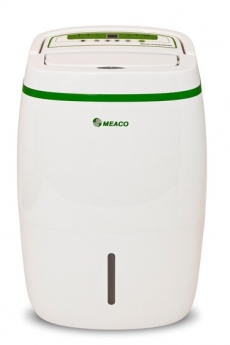
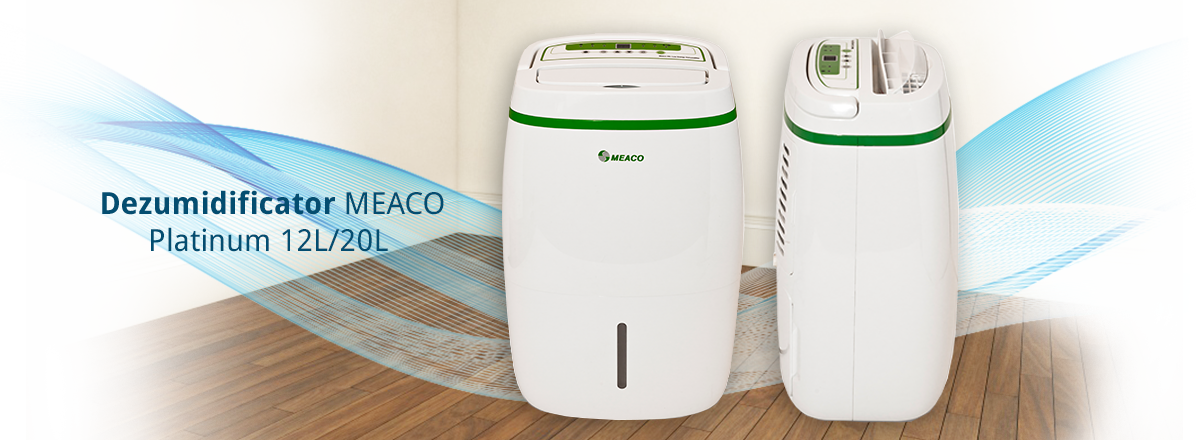
The new Platinum Range from Meaco is exactly that with independent tests proving that they Meaco 12L andMeaco 20L Low Energy Dehumidifiers are cheaper to run than anything else on the market whilst still providing excellent performance. More details on the Platinum Range can be found here.
Leave a comment



Meaco Airvax Air Purifier - white
MeacoMist Deluxe 5 in 1 Ultrasonic Humidifier